

Saving money sounds simple until you check your bank account at the end of the month and wonder where it all went. If you’ve had that feeling, you’re not alone. Teens today are dealing with more spending temptations than any previous generation, including food delivery apps, auto-renewing subscriptions, social media shopping, and buy-now-pay-later services that make it easy to spend money you don’t actually have.
The 10 most effective money-saving tips for teens are: open a separate savings account, set a goal before you spend, use the 50/30/20 budgeting rule, pay yourself first, audit your subscriptions monthly, stop using food delivery for everyday meals, buy second-hand before buying new, always check for student discounts, use the 24-hour rule before impulse purchases, and build a small emergency fund first. Here’s how each one works.
The good news is that the fundamentals of saving money haven’t changed. You earn, you spend less than that, and you put the difference somewhere safe. What has changed is knowing which modern traps to avoid and which habits make the biggest difference in 2026. Whether you have a part-time job, earn money from a side hustle, or just get an allowance, these 10 money-saving tips will help you build the habit of saving before spending takes over for good.
Key Insights
- Keeping savings in a separate account from spending money is one of the most effective changes you can make.
- Modern traps like food delivery, subscription services, and buy-now-pay-later can quietly drain hundreds of dollars per month.
- Even saving $25–$50 per month as a teen adds up to thousands by the time you need it most.
- You don’t need a job to save money. Reducing what you spend has the same effect as earning more.
Tip 1: Open a Savings Account Separate from Your Spending Money
The single most effective saving tip for teens isn’t about what you buy. It’s about where you keep your money. When your savings and spending sit in the same account, it’s too easy to dip into savings without realizing it. Open a separate savings account and treat it as untouchable unless you’re withdrawing for the specific goal you set.
Most major Canadian banks offer no-fee youth accounts with no minimum balance. TD’s Youth Account, RBC’s Day to Day Savings Account, and CIBC’s Smart Start Account are solid starting points with no monthly fees and mobile banking. Once you turn 18, EQ Bank’s Personal Account pays around 2.75% interest with zero fees, which is dramatically better than the 0.01–0.05% you’ll earn at most big bank savings accounts.
Having that separation changes how you think about spending. What’s in the chequing account is for spending. What’s in savings doesn’t exist until you’ve hit your goal.
Tip 2: Set a Savings Goal Before You Spend Anything
Saving money without a reason is hard. Saving money for something specific is much easier. Before you put money aside, write down what you’re saving for, how much it costs, and when you want it by. A short-term goal might be $300 for new headphones in two months. A longer-term goal might be $1,500 for a laptop before September.
When you have a clear target, every purchase becomes a tradeoff: is this worth pushing your goal back a week? Keep your goal somewhere visible, even a note on your phone’s lock screen. If you’re not sure what to save for first, our guide on 21 things worth saving for as a teenager breaks down what actually matters at different life stages.
Tip 3: Use the 50/30/20 Rule to Budget Your Money
The 50/30/20 rule is a budgeting framework that divides your income into three categories: 50% for needs, 30% for wants, and 20% for savings. A budget is just a plan for where your money goes instead of letting it disappear on its own, and this rule makes that plan simple enough to use without a spreadsheet. For teens, “needs” typically means lunches, transportation, and school supplies; “wants” means entertainment, clothes, and going out.
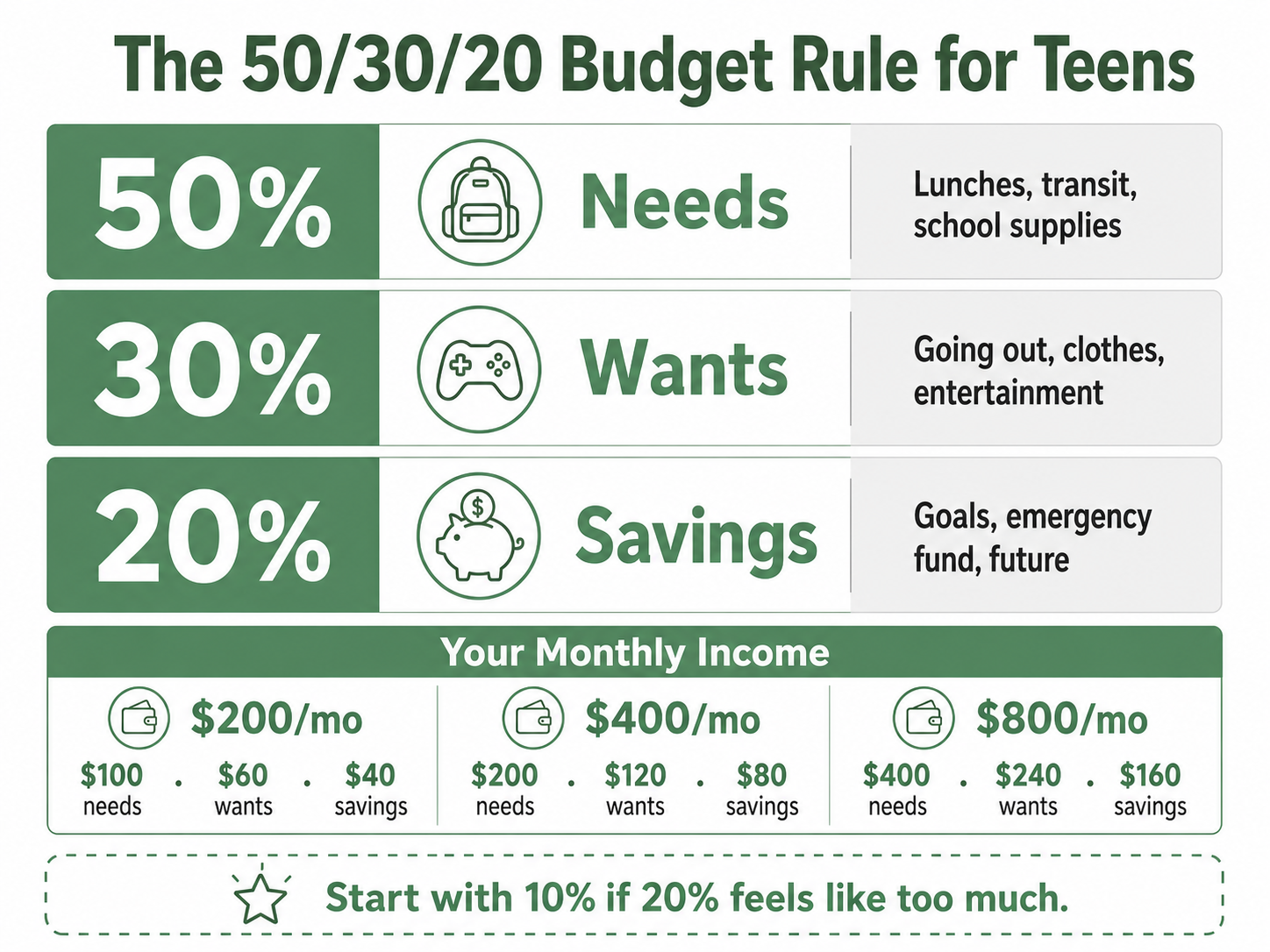
If 20% feels too high at first, start with 10% and build from there. The habit matters far more than the percentage when you’re just getting started. You don’t need a fancy app. A notes app or even a piece of paper works fine. If you do want digital tools, YNAB and Wally are popular options with students. For a deeper dive into making a budget that actually sticks, check out our guide on how to save money in high school.
Tip 4: Pay Yourself First on Every Payday
“Pay yourself first” means the moment you get paid, you move a set amount to savings before spending anything else. You’re not saving what’s left over at the end of the month. You’re spending what’s left over after saving. That small shift in order makes a big difference.
If you earn $200 from a shift, transfer $20–$40 to savings the same day. Then budget the rest for everything else. You’ll adapt to what’s available faster than you expect. If your bank supports automatic transfers, set one up so it happens without you having to decide each time. Removing the decision removes the temptation.
Tip 5: Do a Monthly Subscription Audit
A subscription audit means going through your bank statement once a month, identifying every recurring charge, and cancelling anything you don’t actively use. Subscription services are designed to be easy to sign up for and easy to forget about. Most teens with a debit or credit card have three to five active subscriptions, and some are for services they barely use. Common ones include Spotify, Netflix, Disney+, Apple iCloud storage, Xbox Game Pass, and Duolingo Plus.
For each subscription, ask yourself: did I use this even a few times this month? If not, cancel it. You can re-subscribe any time. Also watch for buy-now-pay-later services like Afterpay and Klarna. They split purchases into installments that feel small in the moment but stack up fast across multiple purchases. If you have more than two active BNPL plans running at once, your spending has outpaced your budget.
Tip 6: Stop Using Food Delivery Apps for Everyday Meals
DoorDash, Uber Eats, and SkipTheDishes are convenient, which is exactly why they’re so expensive. A $12 meal becomes $18–$22 after service fees, delivery fees, and a tip. Order delivery just three times a week and you’re spending an extra $150–$200 per month compared to making the same food yourself.
Packing a lunch for school or making a simple meal at home isn’t glamorous, but the math is hard to argue with. Spending 30 minutes on a Sunday to prep a few easy meals saves more money per hour than almost any other habit on this list. Reserve delivery for genuine occasions, not everyday convenience.
Tip 7: Buy Second-Hand Before You Buy New
Buying second-hand means shopping resale platforms like Depop, Vinted, Facebook Marketplace, or Kijiji before buying new, typically paying 30–60% less for the same item in near-new condition. This approach works especially well for clothing and electronics, two of the biggest spending categories for teens.
Clothing is one of the biggest spending categories for teens. Buying second-hand for everyday wear and saving new purchases for things that really matter to you redirects a meaningful amount of money toward your goals. When you’re done with something, sell it the same way you bought it.
Tip 8: Always Check for Student Discounts Before Paying Full Price
Student discounts give teens and post-secondary students access to reduced prices at hundreds of brands, including Spotify at roughly half price, Apple education pricing on hardware and software, and reduced fares on transit in most major cities. Many of these discounts aren’t advertised at the register, so you have to know to ask. Movie theatres, museums, transit systems, and restaurants also commonly offer student rates.
UNiDAYS and Student Beans are free platforms that compile hundreds of student discounts across brands you already use. Both require a student email to verify enrollment. Get in the habit of checking before paying full price for anything, especially software, streaming services, and events. There’s usually a student rate available.
Tip 9: Use the 24-Hour Rule to Avoid Impulse Buying
The 24-hour rule is a simple impulse-control strategy: whenever you feel the urge to buy something you didn’t plan for, wait one full day before purchasing. If you still want it the next morning, it’s probably a genuine want rather than a reaction to an ad. Impulse buying is the biggest enemy of teen savings, and in 2026 the problem is worse than ever. TikTok Shop, Instagram Shopping, and YouTube ads are built to create urgency around products you didn’t know you wanted five minutes ago. The algorithm is very good at its job.
When you feel the urge to buy something that wasn’t on your radar before today, wait 24 hours. Most impulse purchases feel far less appealing the next morning. Ask yourself: do I actually want this, or did an algorithm decide I wanted this? That one question can save you hundreds of dollars a year. For anything over $50, wait a full week before deciding. If you still want it just as much after seven days, it might be worth the purchase.
Tip 10: Build a Small Emergency Fund Before Saving for Anything Else
Before you start saving for fun goals like trips or tech, build a small emergency fund of $200–$500. This is money that sits in your savings account and only gets used when something unexpected comes up, like a cracked phone screen, an unplanned bus pass, or class materials you didn’t budget for.
Without an emergency fund, unexpected expenses go on a credit card or get borrowed from family, both of which create new problems. With one in place, you handle surprises without derailing your regular saving routine. Once it’s built, leave it alone and start directing your savings toward the goals that matter to you. Our guide on how much you should save before moving out is a good next step for thinking about bigger financial targets down the road.
Start with One Habit and Build from There
None of these tips require a financial background or a high income to put into practice. The common thread is awareness: knowing where your money goes and making small, deliberate choices about it. Teens who build these habits early end up with a real advantage by the time they’re making bigger financial decisions like paying rent, managing student loans, or saving for something that actually changes their life.
Start with one tip from this list today. Open a savings account, cancel one subscription you’ve forgotten about, or set a goal on your phone right now. Once the first habit sticks, add another. The Consumer Financial Protection Bureau’s teen saving resources are also worth bookmarking if you want to go deeper. If you’re looking for ways to earn more so you have more to save, check out the 10 best side hustles for teens in 2026 for ideas that work around school schedules.
This article is for educational purposes and does not constitute financial advice.
Keep learning: building a student budget in Canada.
Frequently Asked Questions (FAQ)
How much money should a teenager save per month?
Any amount you can save consistently is a good start. A common guideline is 10–20% of what you earn. If you bring in $400/month from a part-time job, saving $40–$80 per month gives you $480–$960 over a year. The habit matters more than the amount when you’re building this skill for the first time.
What is the best savings account for teens in Canada?
Most major banks offer no-fee youth accounts. TD’s Youth Account and CIBC’s Smart Start are popular starting points. Once you’re 18, EQ Bank and Neo Financial offer significantly better interest rates (around 2.25–2.75% in 2026) than traditional bank savings accounts. Look for no monthly fees and no minimum balance requirements.
How can I save money as a teenager without a job?
Saving without income means focusing on spending less. Do a subscription audit, use student discounts consistently, buy second-hand, and skip food delivery for everyday meals. Small changes like these can free up $50–$100 per month. You can also sell things you no longer use on Facebook Marketplace, Depop, or Vinted to generate savings without a formal job.
What is the 50/30/20 rule and how does it work for teens?
The 50/30/20 rule divides your income into three buckets: 50% for needs (transportation, school supplies, essentials), 30% for wants (entertainment, going out, clothing), and 20% for savings. For teens with lower or irregular incomes, starting at 10% saved is a solid foundation to build from over time.
If you found this article useful, join the TeenLearner newsletter for more practical guides on earning money, building skills, and managing your finances as a teenager. New articles go out every week, written specifically for teens who want to get ahead before they graduate.