

15 Best Part-Time Jobs for Teens and Students (2026)
Getting a part-time job as a teenager is one of the best financial moves you can make. Beyond the paycheque, you’re building references, work experience, and money habits that will follow you for years. The question is which one actually pays well and works around your schedule.
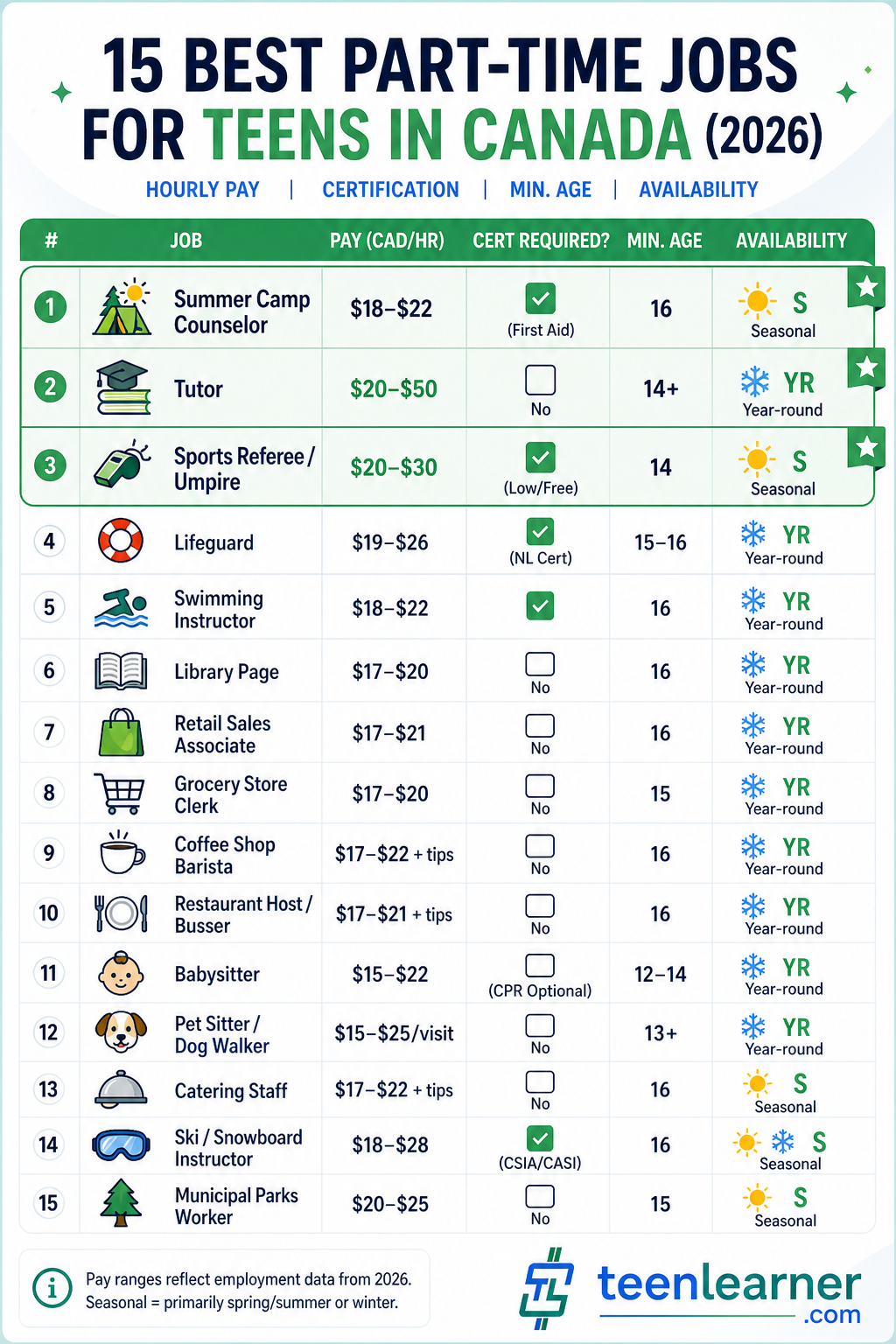
The good news is that in 2026, minimum wages across Canada have risen significantly, with most provinces now sitting at $17/hr or higher. That means even entry-level positions pay more than they did just a few years ago. The 15 best part-time jobs for teens and students in 2026 are: lifeguard, swimming instructor, sports referee, tutor, library page, camp counselor, retail sales associate, grocery store clerk, coffee shop barista, restaurant host or busser, babysitter, pet sitter or dog walker, catering staff, ski or snowboard instructor, and municipal parks worker.
This list focuses on jobs with real pay, reasonable working conditions for students, and a clear path to getting hired without years of experience. Some are obvious. A few are ones most teens overlook entirely. Those tend to be the best ones.
What Do Part-Time Jobs Pay Teens in Canada in 2026?
Most part-time jobs for teens pay between $17 and $26 per hour in Canada in 2026, depending on province and job type. As of early 2026, minimum wages range from $15.00 in Alberta to $18.25 in British Columbia and $18.15 federally. Ontario’s minimum wage sits at $17.60/hr, rising to $17.95 in October 2026. Ontario also maintains a student minimum wage of approximately $16.20/hr for workers under 18 who work 28 hours or fewer per week while school is in session.
Jobs that require certification (lifeguards, swimming instructors, ski instructors) or specialized skill (tutors, referees) consistently pay above minimum wage, making the short training investment well worth it.
1. Lifeguard ($19–$26/hr)
Lifeguarding is one of the best-paying part-time jobs available to teens in Canada, with wages starting at $19/hr and reaching $26/hr at busy aquatic centres and resorts. A National Lifeguard (NL) certification through the Lifesaving Society is required and takes a few weeks to complete. You can work year-round at indoor pools, and outdoor beach and waterpark positions are available each summer. Many recreation centres actively recruit certified lifeguards due to ongoing shortages, which means qualified candidates often get hired quickly. Minimum age is typically 15 or 16 depending on the employer.
2. Swimming Instructor ($18–$22/hr)
A swimming instructor teaches lessons to children and adults at public pools, recreation centres, or private facilities, earning $18 to $22 per hour. Scheduling works well around school since most lessons run evenings and weekends. Certification through the Lifesaving Society or Red Cross is required. If you already have your lifeguard certification, the instructor component is a natural add-on, and many teens work both roles at the same facility throughout the year.
3. Sports Referee or Umpire ($20–$30/hr)
Refereeing community sports pays $20 to $30 per hour and is one of the most overlooked high-paying options for teens who know a sport well. Soccer, hockey, basketball, and baseball leagues all need certified officials, and local recreation associations run training programs that are often free or low-cost. Weekend tournament work can earn $100 to $200 in a single day. Minimum age requirements start as low as 14 for youth leagues. The work builds communication, quick decision-making, and the ability to stay calm under pressure, all of which look strong on a resume.
4. Tutor ($20–$50/hr)
Tutoring pays $20 to $50 per hour depending on subject and level, and you can start with nothing more than strong grades and the ability to explain concepts clearly. High school students typically tutor younger students in math, science, or language arts. College students can charge more for specialized subjects like calculus, chemistry, or standardized test prep. You can find work through tutoring centres, school networks, or by posting on community boards. Our guide to side hustles for teens covers how to set your rate and find your first clients if you want to go independent.
5. Library Page ($17–$20/hr)
A library page earns $17 to $20 per hour to sort, shelve, and organize materials at a public library, and no prior experience is required. Training is provided on the job. Hours follow library hours, which typically means no late nights and no unreasonable weekend demands at most branches. Public libraries in Canada are often unionized, which means consistent wages, structured scheduling, and real job protections from your first week. It’s one of the most underrated positions on this list. This writer did it for ten years.
6. Camp Counselor ($18–$22/hr)
Camp counselors earn $18 to $22 per hour working with children during summer programs and school break camps. You spend your days leading activities, building relationships with kids, and solving problems in a team environment. Most camps require you to be at least 16 and hold a Standard First Aid certification. Some positions are residential, offering room and board in addition to pay, which significantly increases the total value of the summer. The experience translates directly into future roles in education, healthcare, and leadership.
7. Retail Sales Associate ($17–$21/hr)
Retail positions at clothing stores, sporting goods chains, and electronics retailers pay $17 to $21 per hour and are among the most accessible jobs for teens because employers hire frequently and train entirely in-house. Chains like Sport Chek, Winners, and Canadian Tire actively recruit students for evenings and weekends. You’ll develop customer service skills, product knowledge, and the ability to handle difficult situations without losing composure. Many retailers also offer employee discounts of 20 to 40 percent, which adds real value beyond the hourly wage.
8. Grocery Store Clerk ($17–$20/hr)
Grocery store positions pay $17 to $20 per hour and offer some of the most consistent scheduling available to students, with many stores running after-school and weekend shifts by design. Chains like Loblaws, Sobeys, No Frills, and FreshCo hire students year-round, and many have union agreements that guarantee regular wage increases. Cashier, stocker, and bakery assistant roles are all commonly available and don’t require experience to start.
9. Coffee Shop Barista ($17–$22/hr Plus Tips)
Working at a coffee shop pays $17 to $22 per hour plus tips, and major chains like Tim Hortons, Starbucks, and Second Cup hire regularly. Starbucks is known for offering benefits to part-time employees working 20 or more hours per week, which is unusual for student jobs. Tips at busier locations can add $2 to $5 per hour to your effective earnings. The fast-paced environment builds multi-tasking ability and composure under pressure quickly. Most chains hire at 16.
10. Restaurant Host or Busser ($17–$21/hr Plus Tip Share)
Hosting or bussing at a restaurant pays $17 to $21 per hour plus a share of server tips, bringing effective hourly earnings to $20 to $25 at a busy location. No prior experience is needed, and evening and weekend shifts are standard. Working in a restaurant builds speed, communication, and the ability to stay organized when things are hectic, all of which employers across industries value. Most restaurants prefer applicants aged 16 or older.
11. Babysitter ($15–$22/hr)
Babysitting pays $15 to $22 per hour depending on the number of children and your experience, and it offers more flexibility than almost any other job since you set your own availability. Getting a Standard First Aid and CPR certification plus a Red Cross babysitting course significantly increases what you can charge and how quickly families trust you. Many experienced teen babysitters work with three to five regular families and earn $300 to $500 per month with only weekend availability. Minimum age is typically 12 to 14 depending on the province.
12. Pet Sitter or Dog Walker ($15–$25 Per Visit)
Pet sitting and dog walking pays $15 to $25 per walk or visit and is simple to start through word of mouth in your neighbourhood. A teen working five dog walks per week at $20 per walk earns $400 per month with a few hours of total effort. Apps like Rover and Wag connect walkers with clients, though both require users to be 18 or older, making word-of-mouth and neighbour referrals the better starting point for younger teens. The Canada Summer Jobs program also funds paid positions at animal shelters if you prefer a formal employer setting.
13. Catering Staff ($17–$22/hr Plus Tips)
Catering and banquet staff earn $17 to $22 per hour plus tip pools at weddings, corporate events, and fundraisers. The work is event-based, meaning you can take time off during exams without giving up a regular position. Gratuities at high-end events can add $30 to $60 per shift on top of your base wage. Finding work through local banquet halls, catering companies, or staffing agencies is easy. Many catering companies hire at 16, and the experience with high-pressure service environments stands out on a resume.
14. Ski or Snowboard Instructor ($18–$28/hr)
Ski and snowboard instructors earn $18 to $28 per hour at most Canadian resorts, with many positions including a season pass worth $1,000 to $2,000 as a perk. Certification through the Canadian Ski Instructors’ Alliance (CSIA) or Canadian Association of Snowboard Instructors (CASI) is required, and many resorts fund or subsidize that training for new seasonal hires. Most resorts hire from November through March. If you already ski or board and live near a hill, this is worth pursuing well before the season starts.
15. Municipal Parks and Recreation Worker ($20–$25/hr)
Working for a city parks or recreation department pays $20 to $25 per hour and is consistently one of the highest-paying entry-level options for students in Canada. Cities across the country hire students each spring through the Canada Summer Jobs program, which provides wage subsidies to employers who hire youth aged 15 to 30. Municipal positions are often unionized, offer consistent daytime hours, and come with structured supervision. Applications typically open in January or February for summer positions, so applying early is important.
Honourable Mention: Fast Food Crew Member
Fast food is the most common first job for Canadian teens, and there’s a good reason for that. Chains like McDonald’s, Tim Hortons, Wendy’s, and Subway hire at 14 or 15 in most provinces, train entirely in-house, and build schedules around school without any negotiation needed. Pay starts at provincial minimum wage ($17–$18.25/hr depending on where you live). It is not the highest-paying option on this list, but it offers something the certified jobs above do not: you can walk in on a Tuesday and start by the weekend. The experience also travels. A crew position in your hometown becomes a reference and a starting point when you move to a different city for college. Every major chain has locations across the country, which means you can often transfer your position rather than start over. If your goal is to start earning as fast as possible with zero barrier to entry, fast food remains the most reliable path to a first paycheque.
How to Land Your First Part-Time Job
The fastest path to getting hired is to apply to five to ten places in the same week and follow up within a few days. Employers at grocery stores, coffee shops, and recreation centres often hire from the current pile of applications, and showing initiative improves your odds over someone who applied once and waited.
For certified positions like lifeguarding or refereeing, start the certification process before you apply, or ask employers directly whether they fund training for new hires. Many recreation centres and sports leagues do. The Government of Canada’s youth employment page is worth bookmarking for federally funded student positions across the country.
Once you start earning, building the habit of saving a portion of each paycheque early makes a real difference over time. Our guide on how to save money in high school covers practical strategies that work on a student income. And if you want to earn on your own schedule alongside a part-time job, the 10 best side hustles for teens is a good next read.
Updated: May 2026 | This article is for educational purposes and does not constitute financial or legal advice.
Frequently Asked Questions (FAQ)
What is the minimum age to get a part-time job in Canada?
In most provinces, teens can start working at 14 or 15 for non-hazardous jobs, though rules vary. Ontario allows teens aged 14 and older to work in most industries without a permit. British Columbia allows youth 12 and older in light work with parental consent. Always check your province’s employment standards before applying.
How many hours can a student work per week in Canada?
Most provinces don’t set a strict weekly maximum for students over 16, but most educators and employers recommend keeping part-time work to 15 to 20 hours per week during the school year. In Ontario, students under 18 cannot work during school hours and face additional restrictions on overnight shifts.
Do teens have to pay taxes on part-time job income in Canada?
Yes. All employment income in Canada is taxable regardless of age. Your employer deducts income tax, CPP, and EI at source. If your total annual income falls below the federal basic personal amount (approximately $16,129 in 2026), you may receive most or all of that tax back when you file. Our guide to taxes for teenage income explains what applies to you.
Last updated: May 2026
Robert Puharich is the founder of TeenLearner, where he helps teens build real-world skills in money, AI, and life. With over 20 years in education and a Master of Education (M.Ed.) from UBC, he created TeenLearner to teach practical skills such as budgeting, career readiness, decision-making, and the wise use of technology. Robert is also a published author and business founder.