
How to Survive Hyperinflation as a Teen
Most teens think of inflation as a news word that means things cost a bit more than last year. Hyperinflation is something else entirely. It is what happens when a currency loses value so fast that people stop trusting it, prices change daily, and a lifetime of savings can be wiped out in weeks. This article covers what hyperinflation actually is, why it happens, what holds value when a currency collapses, and what teens can do right now to protect their money from high inflation.
What Hyperinflation Actually Is and How Extreme It Gets
Hyperinflation is defined as inflation exceeding 50% per month, a threshold set by economist Philip Cagan in 1956 that remains the standard reference point today. At 50% monthly inflation, prices double roughly every six weeks. In practice, the worst historical episodes have gone far beyond that.
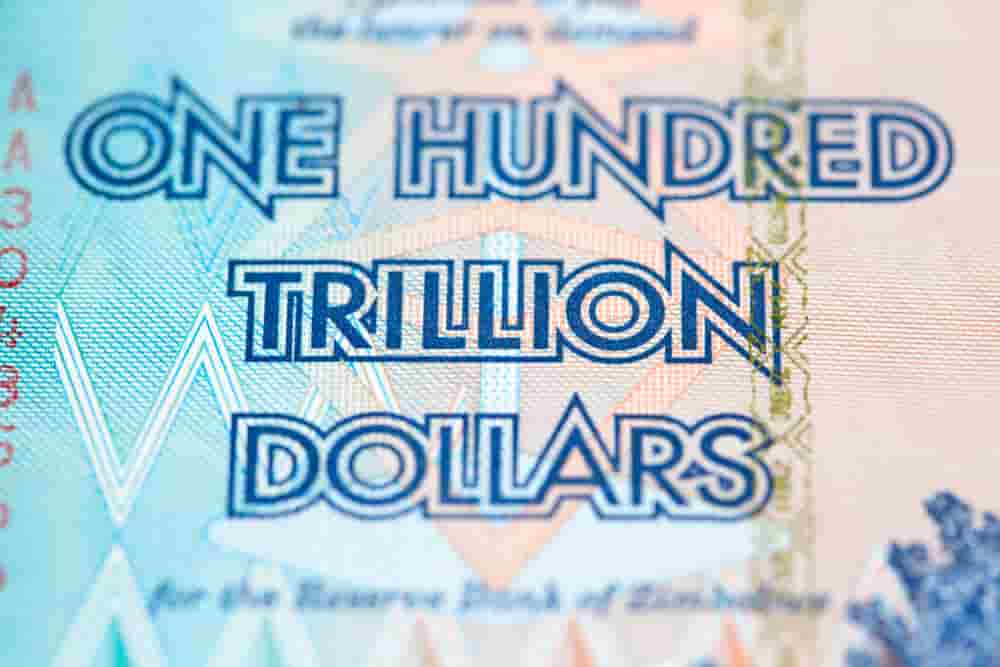
Zimbabwe reached a monthly inflation rate of 79.6 billion percent in November 2008, according to Cato Institute research on troubled currencies. The government eventually abandoned its own currency entirely and switched to foreign money. Venezuela hit an annual inflation rate of 65,374% in 2018, according to the IMF World Economic Outlook. Weimar Germany in 1923 saw prices doubling every few days at the peak, making paper money more useful as fuel than as a means of payment.
These are extreme cases, but they share common causes. Understanding those causes matters more than memorizing the statistics.
Why Hyperinflation Happens in the First Place
Hyperinflation almost always starts with a government printing money faster than the economy grows. When more currency chases the same amount of goods, prices rise. If that process accelerates and people lose confidence in the currency, it can become self-reinforcing. People spend money as fast as they get it because holding it means losing value, which drives prices up further.
Wars, political instability, and supply shocks can all trigger or worsen the cycle. The 2008 Zimbabwe case was driven by land reform policies that collapsed agricultural output alongside unchecked money printing to cover government deficits. Venezuela’s collapse was tied to oil price drops and decades of economic mismanagement. The specific causes vary, but the mechanism is the same. Trust in the currency breaks down.
What Happens to Your Savings and Debt During Hyperinflation
Cash savings are the first casualty of hyperinflation. If you have $10,000 in a bank account earning 2% interest and inflation is running at 500% annually, your money loses almost all its purchasing power within months. The number in your account stays the same. What it can buy collapses.
Fixed-rate debt, on the other hand, can effectively disappear. If you owe $5,000 on a loan and hyperinflation hits, that $5,000 becomes worth almost nothing in real terms. Historically, people who held mortgages during hyperinflation episodes sometimes found their debts essentially wiped out, while creditors (the banks and lenders) were devastated. This is one reason governments and central banks treat inflation control as a serious policy priority.
For teens, the key insight is that cash is not the safe option during hyperinflation. It is specifically the thing that loses value. Understanding what holds value instead is the more useful question.
What Actually Holds Value When a Currency Collapses
Foreign currencies, hard assets, and practical goods tend to hold value best when a local currency collapses. Historically, several of these have served as refuges during the worst hyperinflation episodes.
Foreign currencies are the most common refuge. During Venezuela’s collapse, US dollars and Colombian pesos became the practical medium of exchange in many areas because they held stable value. People who had access to foreign currency could buy food and necessities; those who only held bolivars could not.
Hard assets also tend to hold value better than cash. Real estate, commodities, gold, and silver do not inflate away in the same way paper money does, because their value is tied to physical supply rather than government printing decisions. This is not a guarantee (hyperinflationary environments are chaotic), but historically these asset classes have outperformed cash during currency crises.
Practical goods with durable value also matter. Fuel, food stores, medicine, and tools hold real utility and can be bartered when currency becomes unreliable. In Zimbabwe, people widely traded goods directly rather than using the local currency in everyday transactions.
What Teens Can Actually Do to Prepare for High Inflation
Full hyperinflation is rare in stable, developed economies, but the habits that protect against it also protect against the ordinary inflation teens face every year. Canada, the US, Australia, and most of Western Europe have not experienced hyperinflation in modern history and have institutional safeguards that make it unlikely. However, high inflation (the kind that runs at 7% to 15% annually) is more common and erodes savings in the same direction, just more slowly.
For a teenager, the most actionable steps are straightforward. Keep as little money as possible sitting in low-interest accounts doing nothing. Put savings into assets that tend to grow with or ahead of inflation. Broad index funds have historically returned around 7% to 10% annually over long periods, which outpaces normal inflation. Learn how to read economic indicators such as the Consumer Price Index (CPI), which tracks inflation in real time. Understanding what inflation is doing to your money is the first step to protecting it.
Diversification is the underlying principle. No single asset is perfectly safe in all economic conditions. Spreading money across savings, investments, and real assets reduces the risk that any one failure wipes everything out. For more on the basics of investing, see the TeenLearner guide to stock market basics. For guidance on how much to set aside each month, see how much a teenager should save.
How Understanding Hyperinflation Changes the Way You Think About Money
The biggest lesson from studying hyperinflation is that money is not neutral. Its value is not fixed. It is determined by trust, by supply, by government policy, and by economic conditions that can shift. A dollar today is not the same as a dollar in ten years, and that gap is meaningful.
Teens who understand this think differently about saving, investing, and spending. They do not assume their savings account is automatically safe because the number in it is stable. They think about purchasing power, not just dollar amounts. That shift in thinking (from nominal to real value) is one of the most practically useful things financial education can produce. Understanding how compound interest interacts with inflation makes it even clearer. See the TeenLearner compound interest guide for the full picture. For a broader foundation on how money works, the TeenLearner financial literacy guide is a good starting point.
Frequently Asked Questions (FAQ)
What is the difference between inflation and hyperinflation?
Hyperinflation is inflation above 50% per month, where prices rise so fast that the currency becomes almost worthless within months. Regular inflation is a slow, ongoing rise in prices, typically 2% to 5% per year in stable economies. The scale and speed are fundamentally different.
Can hyperinflation happen in Canada or the United States?
It is extremely unlikely in the near term. Both countries have independent central banks, strong institutional frameworks, and currencies that are widely trusted globally. However, no economy is permanently immune to severe mismanagement or crisis. Understanding how it works is valuable regardless of how likely it seems.
What should you buy before hyperinflation hits?
Historically, people who survived hyperinflation best held foreign currency, hard assets like gold or real estate, and practical goods with lasting utility. The broader principle is to move money out of cash and into things that hold real-world value independent of what the government prints.
Is debt good or bad during hyperinflation?
Fixed-rate debt effectively shrinks during hyperinflation because the nominal amount stays the same while the currency loses value. However, variable-rate debt can become dangerous if interest rates spike in response to inflation. This dynamic has played out in multiple historical hyperinflation episodes, where mortgage holders benefited while lenders were wiped out.
Last updated: May 2026
Robert Puharich is the founder of TeenLearner, where he helps teens build real-world skills in money, AI, and life. With over 20 years in education and a Master of Education (M.Ed.) from UBC, he created TeenLearner to teach practical skills such as budgeting, career readiness, decision-making, and the wise use of technology. Robert is also a published author and business founder.